• |

    How Does a City First Speak to Us?

    도시는 한 번에 이해되지 않는다. 걷는 속도와 빛, 공기의 밀도가 먼저 말을 건다. 이 시리즈는 동네의 첫인상을 기록한다.

    Cities are never understood all at once. They speak through pace, light, and atmosphere. This series records the first impressions of neighborhoods.
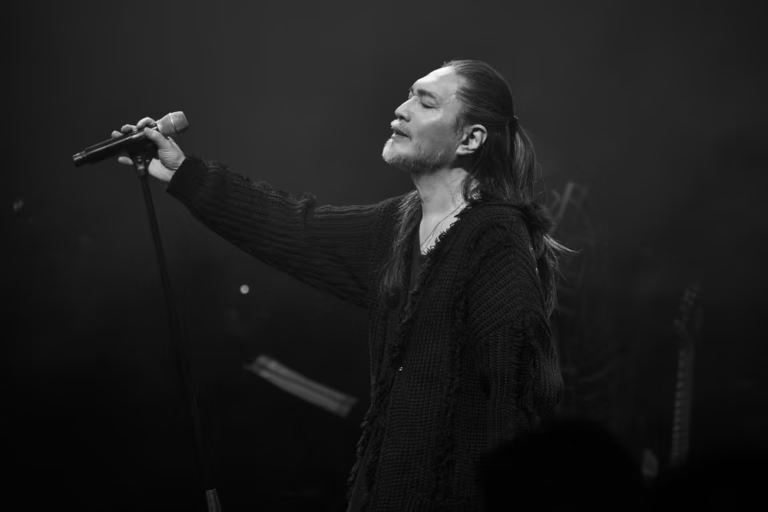
  • Lim Jae-beom, A Four Decade Resonance

    Lim Jae-beom’s forty-year journey reveals how a single voice can hold the emotional rhythm of Korea.

    임재범의 40년은 한 목소리가 한국의 감정 구조를 어떻게 담아낼 수 있는지를 보여준다.

  • A Designer’s Role in the Age of AI

    In an age where AI masters the tools of design, what remains for the designer? A reflection on why perspective, not skill, defines the designer’s role today.

    AI가 디자인 스킬을 대체해가는 시대, 디자이너는 무엇으로 존재해야 하는가. 기술이 아닌 관점이 디자인의 핵심임을 다시 확인하게 된 사유의 기록.

  • Way of Life in Korea

    Rather than defining a new national identity, this column asks what already exists.

    이 칼럼은 ‘한국이라는 국가 브랜드’를 새로 규정하는 대신, 이미 존재하는 한국적 삶의 방식이 무엇인지 질문한다.

  • Two Neighbors, Two Narratives: Korea and Japan as Brands

    Korea and Japan are neighbors with shared history, familiar aesthetics, and constant cultural exchange: yet their national branding paths evolved differently. This essay explores why.

    한국과 일본은 가깝지만 서로 다른 브랜드 정체성을 가지고 있다. 음식, 언어, 산업 구조, 문화적 리듬이 그 차이를 어떻게 만들었는지 살펴본다.

  • Beyond K-Everything

    An exploration of Korea’s national branding. This essay examines the limits of “K-labels” and argues that everyday Korean life holds the deeper cultural codes that can define Korea’s global identity.

    한국의 국가 브랜드를 둘러싼 문제를 탐구하는 칼럼. ‘K-레이블’ 중심의 브랜딩이 가진 한계를 짚고, 한국 일상의 감수성이 새로운 브랜드 자산이 될 수 있는 가능성을 이야기한다.

  • From Brands to Taste

    In Korea, brands often function as identity shortcuts. But when logos replace personal taste, we lose our own narrative. This essay explores the shift from brand-driven consumption to taste-driven identity. 한국에서 브랜드는 단순한 로고를 넘어 하나의 언어가 되어왔다. 하지만 로고가 취향을 대신하는 순간, 우리는 스스로를 설명할 수 없게 된다. 이 글은 ‘브랜드 중심 소비’에서 ‘취향 기반 정체성’으로의 전환에 대해 이야기한다.

  • [Korean Modern Art Series #4] From Informel to Dansaekhwa (1956–1980)

    This article concludes The Kosmosis’s four-part series on modern Korean art — tracing its journey from the first Western painters to abstraction, and from postwar turbulence to the stillness of Dansaekhwa. Modern Korean art after the war was born out of ruins. In the mid-1950s, a new generation of painters began to confront the chaos…

  • [Korean Modern Art Series #3] The Birth of Abstraction (1950-70)

    After the war, Korean art began to draw again. In a time of poverty and ruin, artists turned away from depicting reality and began searching for the spirit beyond it. That was the beginning of Korean abstract art.Four artists — Chu Kyung, Lee Ung-no, Kim Whanki, and Yoo Young-kuk — each pioneered a new way…

  • [Korean Modern Art Series #2] The Birth of National Painters (1930–1950s)

    From Western Influence to Korean Identity The first generation of Korean painters learned to paint like the West.But the next generation began to ask a different question: What does it mean to paint like Korea? Amid war, division, and poverty, artists such as Park Soo-keun and Lee Jung-seob sought beauty not in technique or imitation,…