

[Korean Modern Art Series #1] The First Western Painters (1880–1930)
Modern Korean art begins with a single word: first.
The first Western painter. The first oil painting. The first nude. The first solo exhibition. The first Paris-trained artist. The first Impressionist. The first Fauvist Expressionist.
These firsts were not ornaments. They were openings. Each marked a new way of seeing, translating unfamiliar light, anatomy, and color into a Korean context that had never faced them before.
한국 근대미술 시리즈 #1: 최초의 서양화가들 (1880–1930)
한국 근대미술의 이야기는 단 하나의 단어로 시작된다. ‘최초(First)’.
최초의 서양화가, 최초의 유화, 최초의 누드, 최초의 개인전, 최초의 파리 유학생, 최초의 인상파, 최초의 야수파적 표현주의자.
이 ‘최초’들은 단순한 수식어가 아니라 새로운 시선의 문이었다. 그들은 낯선 빛과 인체, 색채를 처음으로 조선의 맥락 속으로 옮겨 놓으며, 한국 미술이 처음으로 ‘다르게 보는 법’을 배우게 만든 세대였다.
Before the System
When Ko Hui-dong and Kim Gwan-ho began painting in the 1910s, there was no formal institution for Western art in Korea. They belonged to a pre-modern generation, learning the medium directly from Japan and introducing it to Seoul before any official exhibition existed. Their works laid the foundation for the artists who would later enter the era of the Joseon Art Exhibition, which began in 1922 under Japanese rule.
제도 이전의 시기
1910년대 초, 고희동과 김관호가 그림을 시작할 때만 해도 한국에는 서양화를 가르치는 정식 기관이 없었다. 그들은 일본을 통해 매체를 직접 배운 ‘전(前)근대 세대’로, 조선미전이 생기기 이전부터 서울에 서양화를 소개했다. 이들의 작업은 1922년 일제 강점기 아래 시작된 조선미술전람회 시대의 문을 여는 기초가 되었다.

Academism and the Joseon Art Exhibition
From 1922, the Joseon Art Exhibition (Chosen Bijutsuten), organized by the Japanese Government General and modeled after Japan’s Teikoku Bijutsuten (Imperial Art Exhibition), became the main stage for artists in colonial Korea.
Its guiding aesthetic was academism, a system that rewarded technical perfection, harmony, and restraint. Painters were praised for tranquil landscapes and pastoral scenes that reflected the “beautiful peace” of colonial rule. This bureaucratic art excluded political content and idealized rural life, creating images that served the empire’s narrative of a peaceful, productive colony.
Yet, it was also the only legitimate arena where Korean artists could exhibit, compete, and gain recognition. The generation that followed Ko and Kim learned to work within this framework while quietly testing its boundaries.
아카데미즘과 조선미술전람
1922년, 일본의 제국미전(帝展)을 모델로 한 조선미술전람회(Chosen Bijutsuten)가 조선총독부 주관 아래 열리며, 식민지 조선 미술의 중심 무대가 되었다.
이 제도를 지배한 미학은 아카데미즘이었다. 기술적 완성도, 조화, 절제를 미덕으로 삼았고, 화가들은 평화로운 풍경과 목가적인 장면으로 제국이 원하는 ‘아름다운 식민지의 모습’을 재현했다. 정치적 주제는 배제되고 농촌의 이상화된 이미지가 강조되면서, 그림은 예술이자 동시에 ‘평화로운 식민지’라는 제국의 서사를 시각적으로 봉사하는 매체가 되었다.
그러나 조선미전은 한편으로 한국 화가들이 공식적으로 작품을 선보일 수 있는 거의 유일한 장이기도 했다. 고희동과 김관호의 뒤를 이은 세대는 이 틀 속에서 배우고, 동시에 그 경계를 시험했다.
Local Color (향토색): A Beautiful Lie of Empire
By the 1930s, the academic vocabulary expanded to include local color, or hyangtosaek.
At first, the term seemed to promote national sentiment, an effort to capture the colors and emotions unique to Joseon. But beneath that surface, it functioned as a colonial strategy of beautification, a device used by the Government General to make a difficult and impoverished land appear serene and harmonious.
Through the language of “local beauty,” the colonial authorities sought to reframe Korea as a picturesque province of the empire rather than a colonized territory. Hyangtosaek became part of an official campaign to aestheticize control, to replace hardship with a curated image of peace.
The result was an art of aesthetic diplomacy, filled with tranquil fields, peaceful villagers, and ideal skies that softened the reality of exploitation. Artists who exhibited at the Joseon Art Exhibition often had to work within this visual code, whether consciously or by necessity.
Yet within the same structure, some began to reclaim hyangtosaek as their own vocabulary, transforming it into a genuine search for light, place, and belonging that no empire could fully contain.
향토색: 제국이 꾸민 아름다움의 거짓말
1930년대에 들어서면서 ‘향토색(鄕土色, hyangtosaek)’이라는 말이 유행했다. 겉으로는 조선 고유의 색채와 정서를 되찾자는 움직임처럼 보였지만, 실상은 식민지의 척박한 현실을 아름답게 포장하려는 미학적 장치였다. 총독부는 ‘향토의 아름다움’이라는 언어를 통해 조선을 제국의 한 지방처럼 꾸미며, 현실의 어려움을 은폐하고 ‘평화로운 풍경’으로 통치를 미화했다. 그 결과 농촌과 마을, 노동과 삶은 모두 온화한 색감 속에서 재현되었다.
그러나 같은 구조 안에서도 일부 화가들은 이 ‘향토색’을 식민 미학의 언어가 아닌 자신만의 빛과 색으로 다시 해석했다. 그들은 제국의 틀 속에서도 진정한 조선의 색과 장소감, 빛의 정체성을 찾으려 했다.
고희동 Ko Hui-dong (1886–1965)
The first Western painter in Korea.
한국 최초의 서양화가.

The scholar’s world between books and linen, intellect and earth.
In 1909, Ko entered the Tokyo School of Fine Arts, studying under Kuroda Seiki, who had brought Impressionism from Paris to Japan. His Self Portrait with a Fan (1915) is regarded as the first oil painting in Korean art history, a fusion of Impressionist light and Classical balance. The painting’s background reveals a layered identity: shelves of books and a Western painting signal intellectual aspiration, while his open hemp shirt suggests a local sensibility. It is an image of a scholar caught between two worlds.
Beyond painting, Ko shaped Korean art as both an administrator and an educator, later serving as the first director of the Joseon Art Exhibition and mentoring a generation of younger artists.
1909년, 그는 일본 도쿄미술학교에 입학해 파리에서 인상주의를 들여온 구로다 세이키(Kuroda Seiki) 밑에서 유화를 배웠다.그의 부채를 든 자화상(1915)은 한국 미술사 최초의 유화로 평가되며, 인상주의의 빛과 고전주의의 균형이 공존한다. 책장과 서양화가 놓인 배경은 지식인의 세계를, 삼베옷을 입고 단추를 풀어헤친 인물은 토착적 정체성을 상징한다.
그는 전통과 근대, 조선과 서양 사이에 선 지식인의 초상이었다. 화가로서뿐 아니라 행정가이자 교육자로서 조선미전 초대 심사위원장을 맡아 한국 근대미술 제도의 초석을 다졌다.
김관호 Kim Gwan-ho (1890–1959)
The first Korean artist to paint the nude and to hold a modern solo exhibition.
한국 최초의 누드화가이자 개인전 작가.
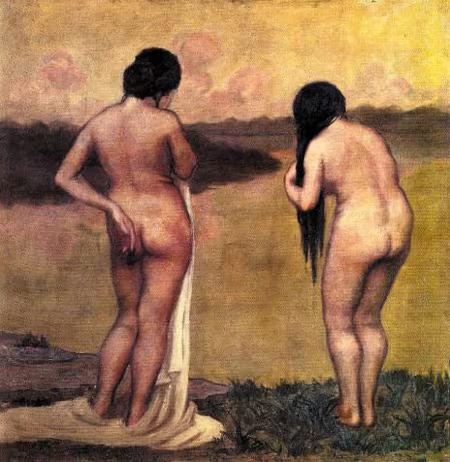
The quiet light of scandal, two nudes under the Daedong sky.
His At Dusk depicts two nude women by the Daedong River, rendered with quiet realism and Impressionist atmosphere. The combination of open landscape and human form was provocative for its time, challenging deep cultural taboos. Romantic in tone yet radical in act, the painting marked a shift toward individual authorship in Korean modern art.
그의 해질녘은 대동강변을 배경으로 한 여성 누드 두 인물을 사실적이면서 인상파적인 분위기로 그렸다. 야외 풍경 속 인체 표현은 당시로서는 금기된 주제였지만, 그만큼 근대적 개인 창작의 시작을 상징하는 사건이었다.
나혜석 Na Hye-sok (1896–1948)
The first Korean female Western painter and the first feminist artist.
한국 최초의 여성 서양화가이자 페미니스트 예술가.

Between realism and revolt, a woman claiming her gaze.
Her Self Portrait, painted during her stay in Paris, captures a turning point between her early Impressionist realism and her later Fauvist expression.
Educated at Tokyo’s Joshibi School of Art, she mastered both oil and watercolor, while her writings articulated a new sense of female subjectivity. Her art and essays together form a declaration of independence in a society that denied it.
파리 체류 시기에 그린 자화상은 초기 인상주의적 사실주의에서 후기 야수파적 표현으로 넘어가는 전환점을 보여준다. 도쿄 여자미술학교(Joshibi School of Art)에서 유화와 수채화를 모두 익혔으며, 그녀의 회화와 글은 동시에 ‘여성 주체성’의 선언문이었다.
이종우 Lee Jong-woo (1899–1979)
The first Korean painter to study in Paris.
한국 최초의 파리 유학 화가.

Awarded at the Salon d’Automne, the first recognition of a Korean painter in Paris.
His Portrait of a Lady, painted during his studies, depicts the Russian wife of a close friend. Through careful modeling and restrained emotion, he conveyed both form and psychology. Lee’s Paris experience became the first direct bridge between Korean and European art, expanding the visual vocabulary of his generation.
유학 시절에 그린 모 부인상은 러시아인 친구의 부인을 모델로 한 초상화로, 형태와 성격을 동시에 포착한 세련된 사실주의를 보여준다. 이 작품은 1927년 파리 살롱 도톤느(Salon d’Automne)에서 한국인 최초로 입상한 기록을 남겼다. 그의 경험은 한국 화단을 처음으로 유럽 미술과 직접 연결시켰다.
오지호 Oh Ji-ho (1905–1982)
The first Korean Impressionist.
한국 최초의 인상주의 화가.

Light melts the last snow, color becomes identity.
His Remaining Snow captures a sunlit alley lined with trees, where shadows appear violet in the winter light. For Oh, this was more than a landscape. He believed Korea was a country of sunlight and primary colors, a “bright land” defined by its tone and air. By reinterpreting hyangtosaek as light rather than ideology, he found a quiet freedom within color itself.
그의 잔설은 겨울 햇살 아래 나무가 드리운 보랏빛 그림자를 담고 있다. 그에게 풍경은 단순한 자연이 아니라 ‘햇살과 원색의 나라’라는 조선의 시각 언어였다. 그는 향토색을 ‘이념’이 아닌 ‘빛의 언어’로 재해석하며, 색채 안에서 자유를 찾았다.
이인성 Lee In-sung (1912–1950)
A prodigy who mastered the language of his time.
시대의 언어를 가장 세련되게 구사한 천재 화가.

Recalls Gauguin’s Ia Orana Maria, blending primitivism with pastoral romanticism.
In 1935, Lee received the Changdeokgung Prize, the Grand Prix of the Joseon Art Exhibition, after already winning six consecutive special prizes.
While his idyllic scenes aligned with the aesthetics promoted by the colonial art system, Lee’s pursuit was artistic rather than ideological. He refined the visual grammar of colonial academism to its highest level, achieving formal harmony and chromatic sophistication rarely matched by his peers. Today, he is increasingly recognized not as a symbol of conformity, but as an artist who reached the pinnacle of pictorial mastery within the very structure that once confined him.
1935년, 그는 조선미전 창덕궁상(대상)을 수상하며 정점에 올랐고 그에 앞서 6회 연속 특선을 기록했다. 그의 목가적인 풍경은 식민지 미학의 틀과 맞닿아 있었지만 그의 관심은 정치가 아니라 예술의 완성 그 자체였다. 이인성은 식민지 아카데미즘의 형식을 가장 높은 수준으로 정련한 화가로, 오늘날에는 그 제도 안에서 오히려 조형적 완성의 정점에 도달한 예외적 예술가로 재평가되고 있다.
구본웅 Ku Bon-ung (1906–1953)
The first Korean Fauvist and Expressionist.
한국 최초의 야수파적 표현주의 화가.

A face of intellect under pressure.
His Portrait of a Friend, depicting the poet Yi Sang, captures the tension and anxiety of a colonial intellectual. The tight lips, hollow cheeks, and intense gaze convey psychological unease, echoing Vlaminck’s Man Smoking a Pipe. Ku’s rough brushwork and dark palette transformed portraiture into an expression of modern despair.
그의 친구의 초상은 시인 이상(李箱)을 모델로 한 작품으로, 식민지 지식인의 긴장과 불안을 생생히 담아낸다. 단단히 다문 입술과 깊게 패인 눈빛은 블라맹크(Vlaminck)의 Man Smoking a Pipe를 떠올리게 하며, 인물화를 내면 심리의 표현으로 확장시켰다.
A Generation of Firsts
Korea’s first Western painters fall into two paths.
From Ko Hui-dong and Kim Gwan-ho’s early experiments to the academy-trained generation that followed, these painters collectively redefined what art could mean in a colonized land.
They learned within systems of power yet found ways to express individuality through them.
Their firsts were not simply chronological, they were conceptual. To paint in oil, to depict the nude, to travel, to teach, to color light itself, each was an act of translation between empires. Korea’s modern eye opened not through rebellion outside authority but through vision cultivated inside it.
Modern Korean art began as imitation made human, a generation of firsts who learned, within confinement, how to see differently.
‘최초’의 세대
한국의 최초 서양화가들은 두 갈래의 길로 나뉜다.
고희동과 김관호는 제도 이전의 선구 세대로서 유화와 누드, 새로운 예술 정체성의 문을 열었다. 그 뒤를 이은 나혜석, 이종우, 오지호, 이인성, 구본웅은 제도 안에서 성장하며 그 틀을 자신만의 언어로 비틀었다.
이들의 ‘최초’는 단순한 연대순이 아니라 개념의 확장이었다. 유화, 누드, 유학, 교육, 빛의 해석 — 그 모든 시도가 서로 다른 제국의 경계 사이에서 이루어진 시선의 번역이었다.
한국 근대미술은 ‘모방에서 인간으로’, 즉 제약 속에서 새로운 시선을 배우던 세대의 이야기로 시작되었다.
Note: This article was written based on the lecture “Scenes of the Firsts in Korean Modern Art” by the Seoul Arts and Culture Education Center.
주석: 본 글은 서울문화예술교육센터의「한국 근현대미술, 최초의 장면들」강의를 바탕으로 작성되었습니다.
Discover more from Kosmosis
Subscribe to get the latest posts sent to your email.


