How “Toowoomba” Became Korea’s Favorite Sauce

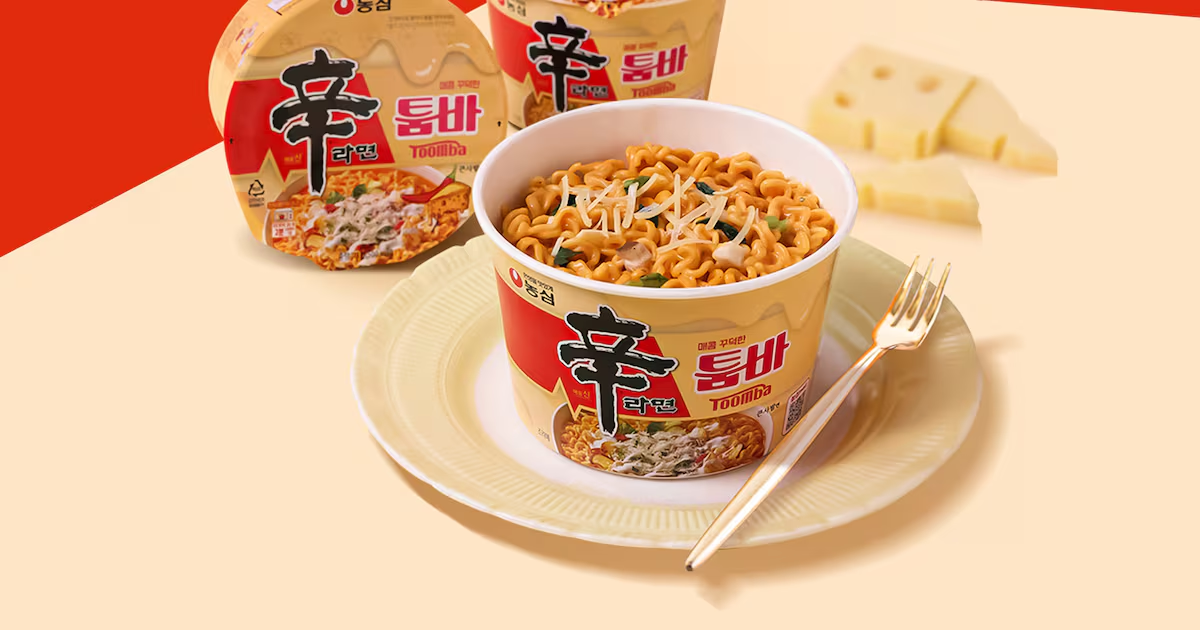
To most Koreans, Toowoomba isn’t a foreign name. You’ll find it on instant noodles, hamburger steaks, and convenience store pastas across the country. Just yesterday at lunch, I ordered a “Toowoomba Hamburg” from a place in Pil-dong. It’s their signature dish.

A Toowoomba Hamburg steak from Pildong Hambak.
The shrimp and cream sauce now lives far from its namesake town.

At this point, the name has become shorthand for a specific kind of flavor. Creamy, spicy, slightly garlicky, usually with shrimp, and unmistakably Korean in its final form. But few ever stop to ask: where exactly is Toowoomba?

The real Toowoomba is a small inland city in Queensland, Australia. A town known more for flower festivals and dry air than for seafood. It’s one of the few major Australian cities with no access to the sea. Which makes it all the more absurd, in the best way, that in Korea, Toowoomba has come to mean a shrimp-laden cream pasta.

Toowoomba’s place on the map. An inland city with no coastline, yet somehow lending its name to Korea’s most popular seafood pasta.

The dish first appeared at Outback Steakhouse. Despite the name, Outback isn’t an Australian brand. It’s American, built on a fantasy of what Australians might eat, imagined by U.S. marketers in the 1980s. In Korea, it worked. The branding took root. The steaks sold. And somewhere along the way, this peculiar “Toowoomba Pasta” appeared on the menu.

Creamy and rich, with chili flakes, soy sauce, and a generous helping of garlic, it was a remix of Italian, Korean, and something else entirely. It wasn’t authentic. Not to Australia, not to Italy, not to anyone’s grandma. But it was delicious. Korean diners fell hard for it.

Other family restaurant chains from that era eventually faded. TGI Fridays, Bennigan’s, Tony Roma’s. But Outback stayed alive. And much of that staying power had to do with Toowoomba. The dish became a kind of anchor. A signature. A survival tactic disguised as comfort food.

Outback’s iconic Toowoomba Pasta. Born in a fantasy of Australia, perfected in Korean mouths. First launched in 2006.

Now, the name lives on far beyond the restaurant that made it famous. It’s a sauce. A flavor. A stand-in for a craving that can’t quite be explained. Toowoomba is no longer just a place. In Korea, it’s part of the everyday menu.

I often wonder if the people living in Toowoomba know. That their dry, landlocked city has given its name to a beloved Korean pasta. That the word Toowoomba might appear more often in Seoul convenience stores than in Australian conversations.

Toowoomba, Queensland. A landlocked Australian town now unintentionally famous for a shrimp cream pasta in Korea.

But that’s how it goes sometimes. A stray word travels halfway across the world. Lands in the right mouth. And stays.

Similar Posts

  • |

    Americana Revisited: Tracing Korea’s Burger Memories from Ichon to Dogok

    In Dogok-dong, tucked behind a modest sign that simply reads “HAMBURGERS,” sits OneStar, a burger shop where the lighting, menu, and vinyl booths feel lifted from an earlier time. But this isn’t an accident. Everything here is intentional. Carefully curated. Thoughtfully branded. And, crucially, the food lives up to the mood. That, more than anything,…

  • |

    Chungmuro — Korea’s First Hollywood

    From the Silver Screen to Printing Presses: The Evolution of Korea’s Creative Heart In the 1950s and 60s, Chungmuro naturally became Korea’s film hub. Movie studios needed promotional materials — posters, scripts, brochures — and the print shops were already here, ready to meet the demand. This symbiotic relationship between filmmakers and printers gave birth…

  • Way of Life in Korea

    Rather than defining a new national identity, this column asks what already exists.

    이 칼럼은 ‘한국이라는 국가 브랜드’를 새로 규정하는 대신, 이미 존재하는 한국적 삶의 방식이 무엇인지 질문한다.

  • Q&A with Seoul Goodman

    Meet the person behind Kosmosis Q: Who are you? A: I go by Seoul Goodman. It’s a pen name, a state of mind, and perhaps a quiet commitment to where I’m from. I’m a cultural storyteller focused on portraying Korea in ways that are emotionally honest, visually layered, and globally resonant. Q: Why did you…

  • [Korean Modern Art Series #1] The First Western Painters (1880–1930)

    Modern Korean art begins with a single word: first. The first Western painter. The first oil painting. The first nude. The first solo exhibition. The first Paris-trained artist. The first Impressionist. The first Fauvist Expressionist. These firsts were not ornaments. They were openings. Each marked a new way of seeing, translating unfamiliar light, anatomy, and…

  • Daegu — A Journey Through Korea’s Layered Identity

    Where History Meets Modernity: Exploring Daegu’s Hidden Depths What began as an inspirational meeting with an artist breathing new life into traditional Korean textiles — ramie (모시) and hemp (삼베) — for modern wardrobes unfolded into a journey of discovery through Daegu’s layered identity. Daegu, the fourth-largest city in Korea and the capital of North Gyeongsang Province,…