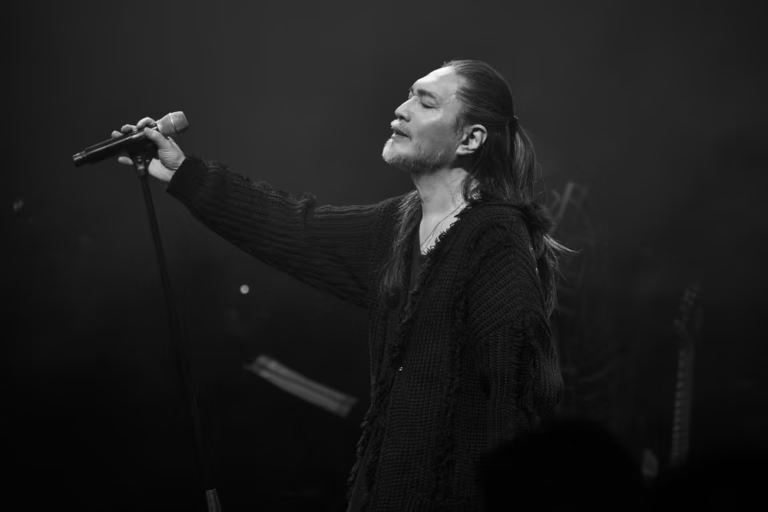
Q&A with Seoul Goodman
Meet the person behind Kosmosis

Q: Who are you?
A: I go by Seoul Goodman. It’s a pen name, a state of mind, and perhaps a quiet commitment to where I’m from. I’m a cultural storyteller focused on portraying Korea in ways that are emotionally honest, visually layered, and globally resonant.
Q: Why did you start Kosmosis?
A: The seeds were planted back in the late ’90s when I first moved abroad to Rome. At the time, Korea barely registered in most people’s imagination. Since then, it’s been my quiet mission to share Korea with non-Koreans in ways that feel both authentic and relatable. Not flattened into clichés or exported hype, but shown with texture, care, and emotional truth.
Now that the world is watching Korea, I believe this kind of storytelling matters more than ever.
Korea isn’t just BTS, Olive Young, or fire noodles. It’s also subtle, slow, local, and deeply human.
Q: What is Kosmosis?
A: It’s an independent editorial studio. A personal platform to rethink Korean “cool” through essays, photo series, and documentary-style videos. Less about trends, more about emotional resonance. I call it cultural storytelling in soft focus.
Q: What does the name mean?
A: Kosmosis = K + Osmosis. Korea meets the quiet diffusion of ideas.
It reflects how I want stories to travel; slowly, naturally, and across borders without force.
Q: What’s your background?
A: I’ve worked across creative direction, cultural strategy, and storytelling in various forms: brand, editorial, visual, and experiential. What connects it all is a desire to shape how Korea is felt and understood beyond its surface exports.
Q: What kind of stories do you tell?
A: I gravitate toward overlooked details. A café with no sign, a residential street with strange harmony, a dessert that tells a story. I believe mood is a kind of message, and that culture often lives in quiet gestures.
Q: Where can we find your work?
A: I share visual essays on Instagram, while earlier work includes narrative pieces on Medium and documentary-style videos on YouTube exploring local culture and everyday rituals.
Q: Can people reach out?
A: Always. Whether it’s a collaboration, a conversation, or a kindred curiosity, I welcome it.
hello@thekosmosis.com